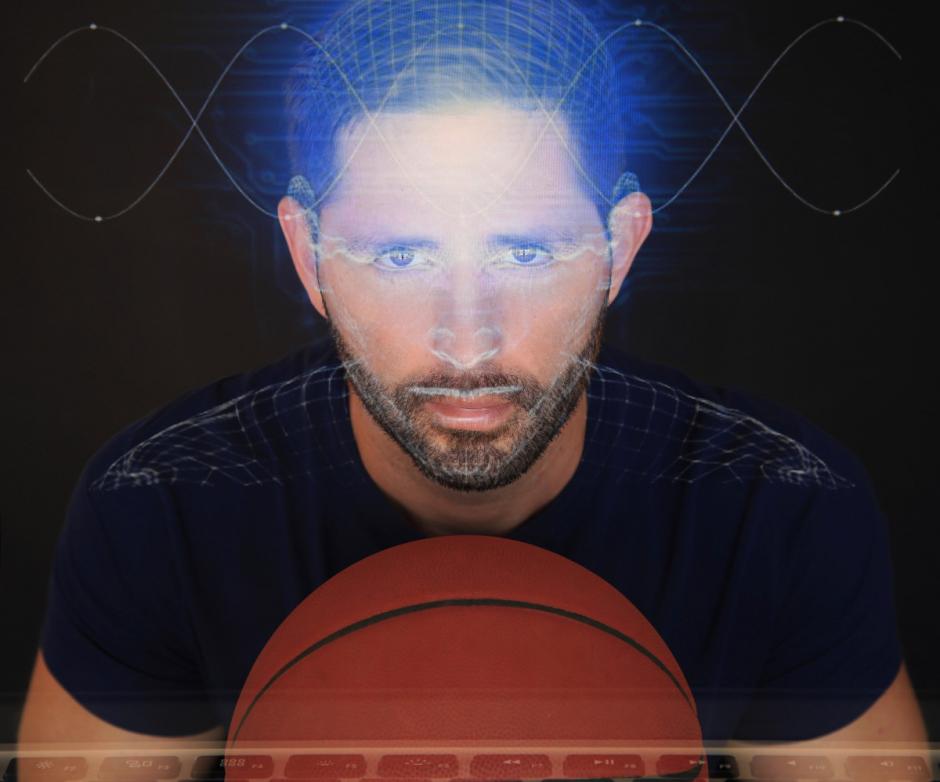
Society confuses power with control. Those who Master any sport or instrument make it look effortless. Their training, commitment and motivations are crucial for extraordinary achievement, but never is “trying too hard” rewarded with success. Similarly, truly effective and powerful leaders are not controlling, instead they inspire and empower others around them to do their best.
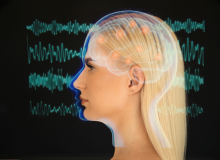
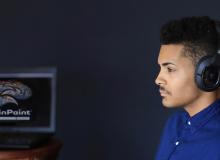
Most people have beliefs about what letting go of control would look and feel like, but BrainPaint neurotherapy gives a person an experience of it. Just as a person can not use willpower to access “the zone” – a mental state in which a person is fully immersed in a feeling of energized focus – a person will never be able to use control to get BrainPaint’s graph to stay green (versus red). Your brain, the organ, learns better control while your mind learns to surrender control. This is a very important distinction. When you have achieved this flow of relaxed focus, the BrainPaint software will alert you that you are “in the zone”.
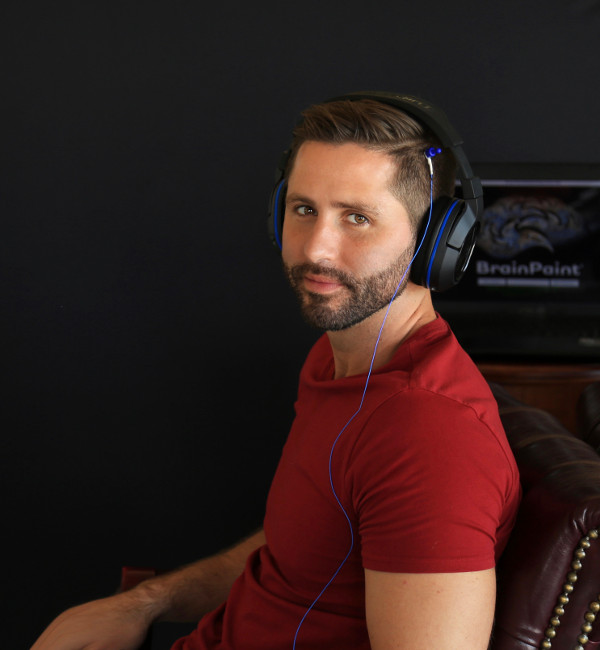
When you are playing a sport, do you tell your heart to beat faster or your lungs to take in more air? Of course not. It is the power of your brain that juggles all the necessary bodily processing for you to rise to the occasion. If you improve your brain’s functioning, then you improve your game, whatever your game may be.
How many times have you gotten in the way of your own success? Intrusive thoughts and negative self-talk invade your mind and cloud your judgement. You are no longer in the present – your mind is elsewhere. The more you try to control your thoughts, the more they appear to have a mind of their own. Neurotherapy trains your brain to stay in the present even after you make an error. Being present allows you the luxury of seeing other possibilities versus being locked into ruminating about how you missed your only opportunity to win.
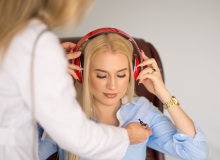
The goal with neurotherapy is to influence the physical connections in the brain using technology as a guide and teacher. BrainPaint also has a mindfulness trainer that was created with the assistance of Jeffrey Schwartz, MD, Associate Research Professor of Psychiatry at UCLA School of Medicine.
High-Level Athletes Who've Amped Up Their Performance with Neurofeedback:
- NBA All-Star Chris Kaman openly discusses his ADHD misdiagnosis and how neurofeedback helped him conquer anxiety in this LA Times article and in his YouTube video "Unmedicated." After his neurofeedback training, Kaman had his BEST season ever and was ranked among the league leaders in rebounds, blocked shots, and "double-doubles," per Jim Robbins' A Symphony in the Brain.
- Lauren Sesselmann, whose Canadian Olympic soccer team captured a bronze medal at the 2012 Summer Games in London, shares her perspective on neurofeedback: while physical prowess is vital to success, one's mental game might play an even bigger part in success. In this Reuters article, she attributes much of their success to her team's BrainPaint brain training.
- Teter underwent BrainPaint brain training leading up to the 2010 Winter Olympic Games in Vancouver, Canada, where she won silver in the halfpipe. Brief video on BrainPaint, including mention of Hannah Teter.
- Olympic luge competitor, Anne Abernathy, experienced debilitating brain injuries in a severe 2001 accident during competition -- only one year before the Olympics -- leaving her hopes for a 5th Olympic games crushed. Suffering from seizures, episodic losses of consciousness, and a loss of three years of her memory, Anne faced the dim prospect of years of treatment as well as medication to help her in her recovery process. Always the competitor, she knew there had to be a way to recover faster and more fully. That's when she turned to neurofeedback. Defying all odds, ONLY 11 months later at 52-years-young, Anne competed in her 5th Olympics → something she was told she would never be able to do. In the 2002 Olympics, she placed 26th overall in women's luge and set two records: 1) she became the oldest female Olympic athlete, and 2) she had the most Olympic appearances by a female athlete. See more of Anne's story in video.
- The most successful male Austrian skier ever--winning 54 World Cup races with 96 podium placements--Maier experienced a dramatic improvement in his athletic performance as a result of neurofeedback. He not only won the overall World Cup four times--1998, 2000, 2001 and 2004--but he also won two Olympic gold medals in the 1998 Winter Olympics at Nagano as well as silver & bronze medals in the 2006 Torino Winter Games.
- Paired up with Misty May-Treanor, Kerri Walsh-Jennings won Olympic gold in beach volleyball at the 2004, 2008 and 2012 Summer Olympic Games, and is known as one of the best players to ever compete in the sport. She credits neurofeedback with helping her keep her competitive edge. Read more in this Wall Street Journal article.
- Alexandre Bilodeau--the Canadian men’s mogul champion who won Olympic gold in 2010 & 2014--credited his gold medal to neurofeedback.
- The Canadian Olympic team used neurofeedback extensively in the 2010 Olympics in Vancouver.
- The Vancouver Canucks Men's Hockey Team--after a 20-year post-season drought--won the 2011 Stanley Cup championship; also, they're holders of the best regular season in the NHL in both the 2010-2011 and 2011-2012 seasons.
- The Italian National Men's Soccer Team won the 2006 FIFA World Cup.
- Jessica Hardy: 2012 U.S. Swim Team Olympic Gold Medalist
- Eric Shanteau: 2012 U.S. Swim Team Olympic Gold Medalist
- Tennis Player Mary Pierce: Winner of Four Grand Slam Titles
- Denver Broncos: AFL Division Leaders 2014 & Superbowl Champions 2016
- New York Giants: Superbowl Champions 2008 & 2012
- Chicago Bears: NFL Division Leaders 2007
- Phil Mickelson: World Golf Hall of Famer